


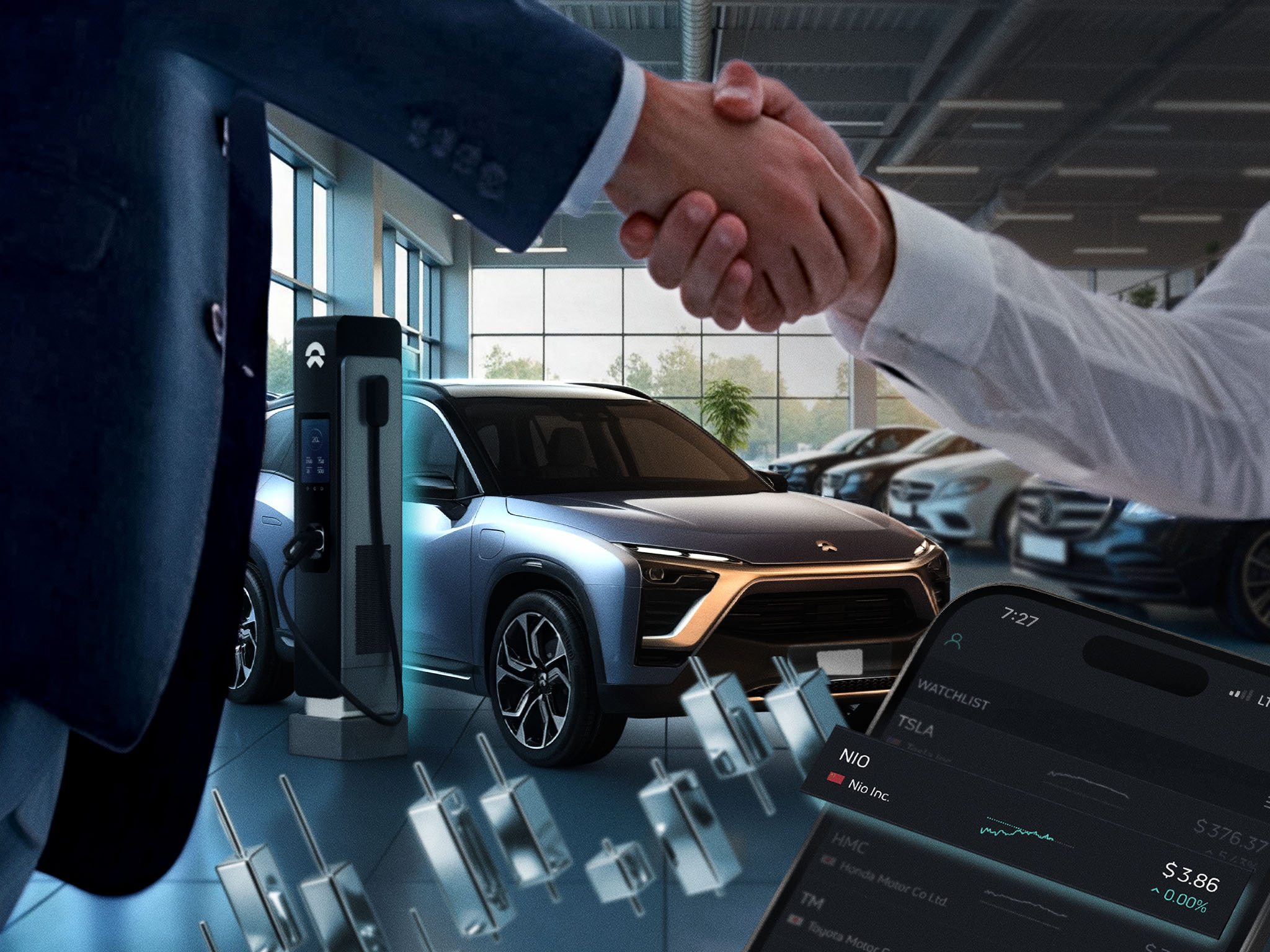


Chinese automaker NIO (NYSE: NIO) has been working on building its brand to appeal to drivers seeking to buy electric vehicles in a market that is facing stiff competition.
The delivery of its electric SUVs has been rising during the past two quarters in 2026 with 83,465 in the first quarter and 107,658 in the second quarter, a 49.4% year-over-year increase.
NIO reported revenue of $4.7 billion during the second quarter, an increase of 69% year over year. But Wall Street analysts had estimated revenue of $4.8 billion, according to FactSet.
The company’s net losses are shrinking. NIO reported a net loss of $77.8 million (RMB 528 million) compared with a net loss of $697.2 million (RMB 4,994.8 million) in the second quarter of 2025 and a net loss of $48.1 million (RMB 332.1 million) in the first quarter of 2026.
Some investors are less confident about the outlook of the electric vehicle automaker, sending shares down by 4% on September 1 on the U.S.-listed American depositary receipts known as ADRs. The stock has fallen by 38% in the past year, but the losses have declined to 16% during the past month.
Through May 21, the stock had been up by 10% in 2026 and rose by 42% over the past 12 months due to higher revenue.
NIO estimates that revenue will reach $5 billion for the third quarter while Wall Street has forecast a slightly higher amount of $5.3 billion in revenue.
Electric SUVs remain popular
NIO’s electric SUVs are extremely popular with drivers in China, but there is a lot of competition in the country and the government is providing fewer financial incentives for buyers of EVs.
NIO’s management has worked to improve its profit margins for its vehicles which have risen by 8 percentage points year over year to reach 18.5%.
Through August, NIO sold 262,893 cars, up 58% year over year as the company has launched several new models. In May, the company launched the ES9, which is also a popular purchase with drivers.
“The [updated] ES8 has sustained strong market momentum since its [September 2025] launch and reached its 140,000th delivery within 335 days,” said CEO William Bin Li in a statement. “The ES9, our executive flagship SUV, continues to win over users from traditional fuel-powered luxury SUVs, ranking first in sales among passenger vehicles priced above RMB 500,000 [$74,000] in China in both June and July.”
The ONVO brand “has become the sales leader in China’s [$30,000 to $45,000] large SUV segment,” he added. “Meanwhile, the Firefly has ranked first in market share in China’s high-end small-car market for 15 consecutive months.”
Founded in 2014, the company has invested heavily in developing its brand and offers premium smart EV vehicle models under the NIO, ONVO and the Firefly brands. The ONVO and Firefly brands cater to the midrange and premium-compact EV segments to attract more buyers. Firefly is its least expensive brand, which is attractive to drivers who want to spend less money. NIO now has a sales and service network spanning 24 countries and regions, including China, central Asia, southeast Asia, Europe, the Middle East and Central America.
Management predicts higher auto sales for the fall and anticipates delivering 109,500 cars in the third quarter. That could mean delivering 37,500 cars in September, up from the 34,749 vehicles delivered in September 2025. In July and August, the company delivered a total of 71,770 cars.
The adoption of EVs by drivers in China has been robust. Despite a slight slowdown in 2025 because the country’s trade-in offer was stopped temporarily, Chinese drivers consisted of over half of the increase in electric car sales globally in 2025, according to the Global EV Outlook report produced by the International Energy Agency (IEA).
The electric car market rose by 20% in 2025 from 20% from 2024 to exceed 20 million sold while the share of electric cars sold in the overall car market increased to 25%, the report said.
But consulting firm AlixPartners forecasts the demand for EVs to drop in major markets in 2026, including China and the U.S. due to lower demand from drivers. In China, revenue dropped by 18% in the first five months of 2026 as subsidies have been withdrawn and the economy slowed down. But Chinese automakers are estimated to export around 10 million vehicles in 2026, up from 7.1 million in 2025, AlixPartners said in a report.
Although total light vehicle sales are anticipated to fall by 10% this year to 24.6 million, the global EV market will rebound to 26.2 million vehicle sales by 2030, AlixPartners added.
New SUVs, expanding into more markets
NIO has developed a premium brand image from the “ground up in China’s midrange- to high-end EV market” through investments in marketing such as competing in the ABB FIA Formula E Championship electric racing series, wrote Vincent Sun, a senior equity analyst for Morningstar Asia Limited.
The company continues to develop new products and launched the new NIO ES8, a five-seater electric SUV in July.
NIO also launched the new NIO ES9 SUV and the ONVO brand’s large five-seat SUV L80 in April. The NIO ES9 is a sleek-looking SUV that can fit six passengers since it has 816 liters of storage capacity with an additional 216-liter smart front trunk that drivers can use to put their everyday items and purchases.
In 2025, the company said it was selling more cars in additional markets in Singapore, Uzbekistan, and Costa Rica through partnerships with local distributors between 2025 and 2026.
The adoption of new energy vehicles (NEVs) is rapid in China due to an improved charging infrastructure and a regulatory push, wrote Vincent Sun, a senior equity analyst for Morningstar Asia Limited.
By 2030, passenger NEVs could account for nearly 70% of total passenger car sales while NIO’s vehicle delivery is estimated to “reach about 670,000 units in 2030 from about 326,000 units in 2025, taking 3% share in China’s passenger NEV market,” he added.
“While it is still loss-making, we forecast an improved outlook for vehicle sales profit due to increased vehicle deliveries,” Sun said.
The company could finally reach profitability in 2027, he added.
NIO’s growing revenue and popularity with drivers could lead to higher vehicle profit margins and emerging as a profitable company.


Comments