


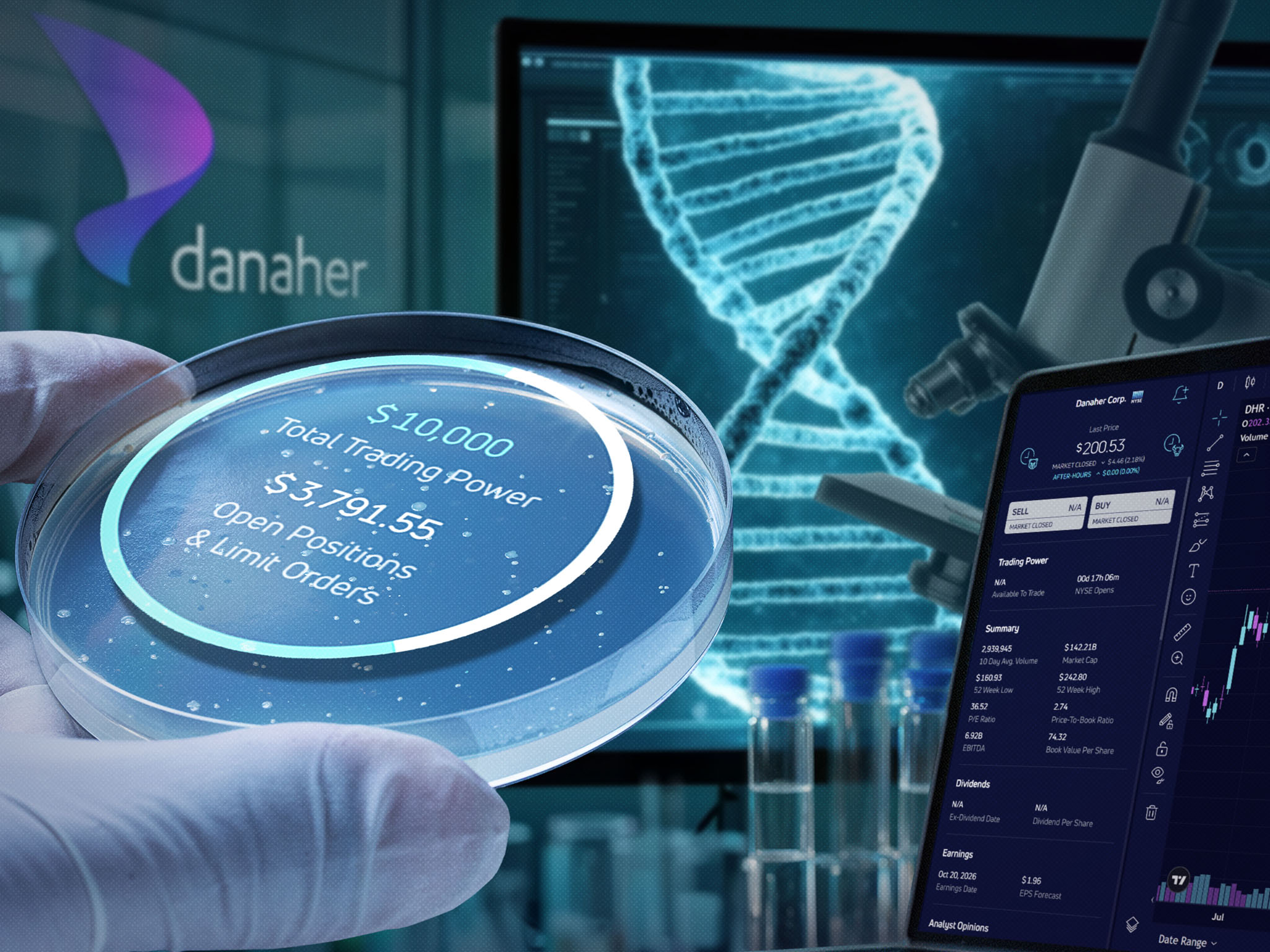


Danaher (NYSE: DHR), a major provider of tools and technologies for drug development, has struggled over the past five years amid a post-Covid slump for much of the pharmaceutical industry.
During that period the stock generated a negative annualized total return of 5.7%. On Aug. 3, it announced the departure of CEO Rainer Blair in favor of its diagnostics unit chief Julie Sawyer Montgomery. Morningstar analyst Juliet Utterback doesn’t see that as a bad thing.
“This leadership transition comes at a challenging time for Danaher, as attempts to exit a multi-year reset period and share slump were thwarted last quarter by a pushback in order timing at a few major bioprocessing customers,” she wrote in a report.
“We do not think the story is broken at Danaher, though, so we appreciate that the new CEO is an insider who is well-versed in the unique culture at Danaher, which includes the Danaher Business System that focuses on continuous improvement.” The stock has gained 3% since release of the leadership change news.
Second-quarter earnings
Danaher’s second-quarter earnings report was a mixed bag. Revenue climbed 5.5% from a year ago, and adjusted earnings per share increased 8%. But the company’s full-year 2026 forecasts didn’t meet expectations.
It expects core revenue to ascend 3.0% to 4.0%, compared to its prior projection of 3% to 6%. Danaher lifted its estimate for adjusted net earnings per share to a range of $8.45-$8.60, up from $8.35 to $8.55.
The company has three segments: Diagnostics, which accounts for about 50% of profit; biotechnology, which accounts for 40%; and life sciences, which accounts for 10%.
As for diagnostics, Danaher provides a large tool set, including clinical chemistry, immunoassays, hematology, tissue-based, and molecular diagnostics. It sells these products mostly to hospitals, physician offices and labs.
“Getting a diagnostic system placed in a lab initially relates to the differentiated features of Danaher’s proprietary technology,” Utterback said. And once the products are in place, there are switching costs, although shorter in time than its other segments. “Labs are hesitant to replace systems that are integrated into their workflows,” she said.
Life sciences, biotechnology, AI
Looking at biotechnology, Danaher’s products are superior in boosting the performance, accuracy, and speed of research projects, Utterback said. And Danaher’s biotech products are sticky due to regulatory and reproducibility factors.
Turning to life sciences, the drug manufacturing part of the market is quite attractive, thanks to its strong growth, high margins, and high switching costs, she said.
Danaher also can benefit from artificial intelligence, experts say. “Danaher is a second-order AI play,” Todd Ahlsten, a portfolio manager at Parnassus, told Barron’s. “We see AI accelerating biological discovery, which means more customers will need Danaher’s tools.”
The company has a solid business model, Utterback said. It makes exceptional investments, has a strong strategic vision, executional excellence, a sound balance sheet, and appropriate distributions.
Danaher’s profit should grow, especially from 2027-30, helping to lift the stock, she predicted. Profits will bloom thanks to reshoring by drug manufacturers, refreshing of instruments purchased during the pandemic boom, potential AI-related demand and cost controls.
So Danaher may be on the mend.


Comments