


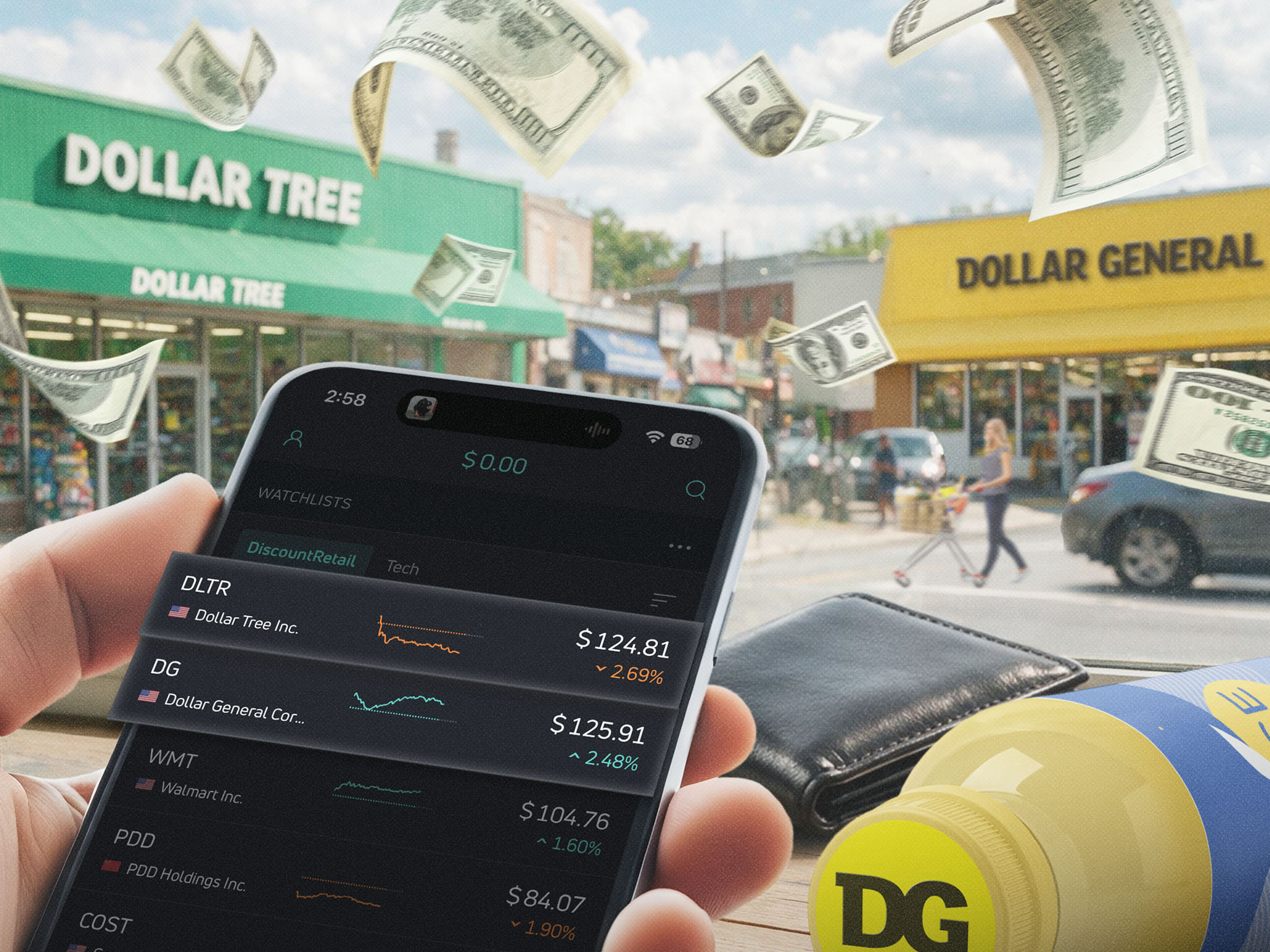


Stubborn inflation and stagnant wages are putting a dent in the finances of U.S. workers. And that financial strain is sending them to discount retailers, raising the fortunes of those stores.
That’s certainly true for the two biggest U.S. discount retail chains, No. 1 Dollar General (NYSE: DG) and Dollar Tree (NASDAQ: DLTR).
Dollar General enjoyed a 5.2% revenue increase in the second quarter from a year earlier, and Dollar Tree’s revenue gained 7%. Dollar General’s adjusted profit margin soared 50 basis points to 31.8%, and Dollar Tree’s jumped 170 basis points to 36.1%.
Though they’re in the same industry, the two companies have quite different business models.
Dollar General operates like a traditional mini-mart, with varied, multi-price merchandise, while Dollar Tree offers fixed low-price points from $1.25 to $7.
Dollar General has more than 21,000 stores, and about 80% are in towns with less than 20,000 residents that frequently have no grocery or mass-merchant within 15 miles. By contrast, Dollar Tree has more than 9,400 stores, with more than 85% of them in dense urban and suburban areas.
Different items, plentiful private label
Dollar General features brand-name groceries, household essentials and cleaning supplies, while Dollar Tree focuses on party supplies, seasonal decor, crafts and novelty items.
At Dollar General, consumables (items that are used up quickly) account for 82% of sales, seasonal items for 10%, home products 5%, and apparel 3%. More than 20% of sales are derived from private label goods, which have profit margins 25%-30% higher than national brands, notes Morningstar analyst Brett Husslein.
At Dollar Tree, consumables account for 49% of sales, variety goods (general merchandise) for 45%, and seasonal goods for 6%. It has an even heavier focus on private-label than Dollar General, with those goods accounting for almost one-third of sales.
Husslein likes Dollar General better than its smaller peer. The former particularly benefits from the locations of its stores, he says.
“The company’s dense, small-town store network, where roughly 75% of Americans live within five miles of a Dollar General, has established it as a dependable, go-to retail destination for millions of lower-income households,” Husslein maintains.
“This proximity advantage encourages frequent, mission-based shopping trips and customer familiarity, which in turn support the firm’s supply chain efficiency and reinforce its cost leadership.”
Dollar General has cracked the code for its market niche. “It has leveraged this combination of physical reach and operational scale to lower unit costs and pass savings on to value-conscious customers in markets that are structurally more challenging and costly to serve. That’s low-income, low-density, small-town America.”
Dollar Tree relies on execution
Dollar Tree’s strength comes from a different place. That’s “execution-driven efficiencies and merchandising discipline, rather than from structural advantages such as scale, procurement leverage, or geographic insulation that support peers” with competitive advantages, like Dollar General, Husslein said.
Dollar Tree stores are often located near competitors such as Walmart (NYSE: WMT) and Germany’s Aldi. Dollar Tree also faces stiff competition from new online players, such as PDD Holdings’ (NASDAQ: PDD) Temu of China and Shein of Singapore.
To be sure, Dollar Tree is well-managed, he said. “Its compact format, efficient cost structure, and broad customer appeal should continue to support improving profitability.” The downside: “These attributes are readily replicable.”
Both stocks have ascended over the past year, though they trail the S&P 500. Dollar General has risen 13.7%, and Dollar Tree advanced 12.4%.
With many consumers still suffering, they may continue to do their buying at the two discount retail titans.


Comments