


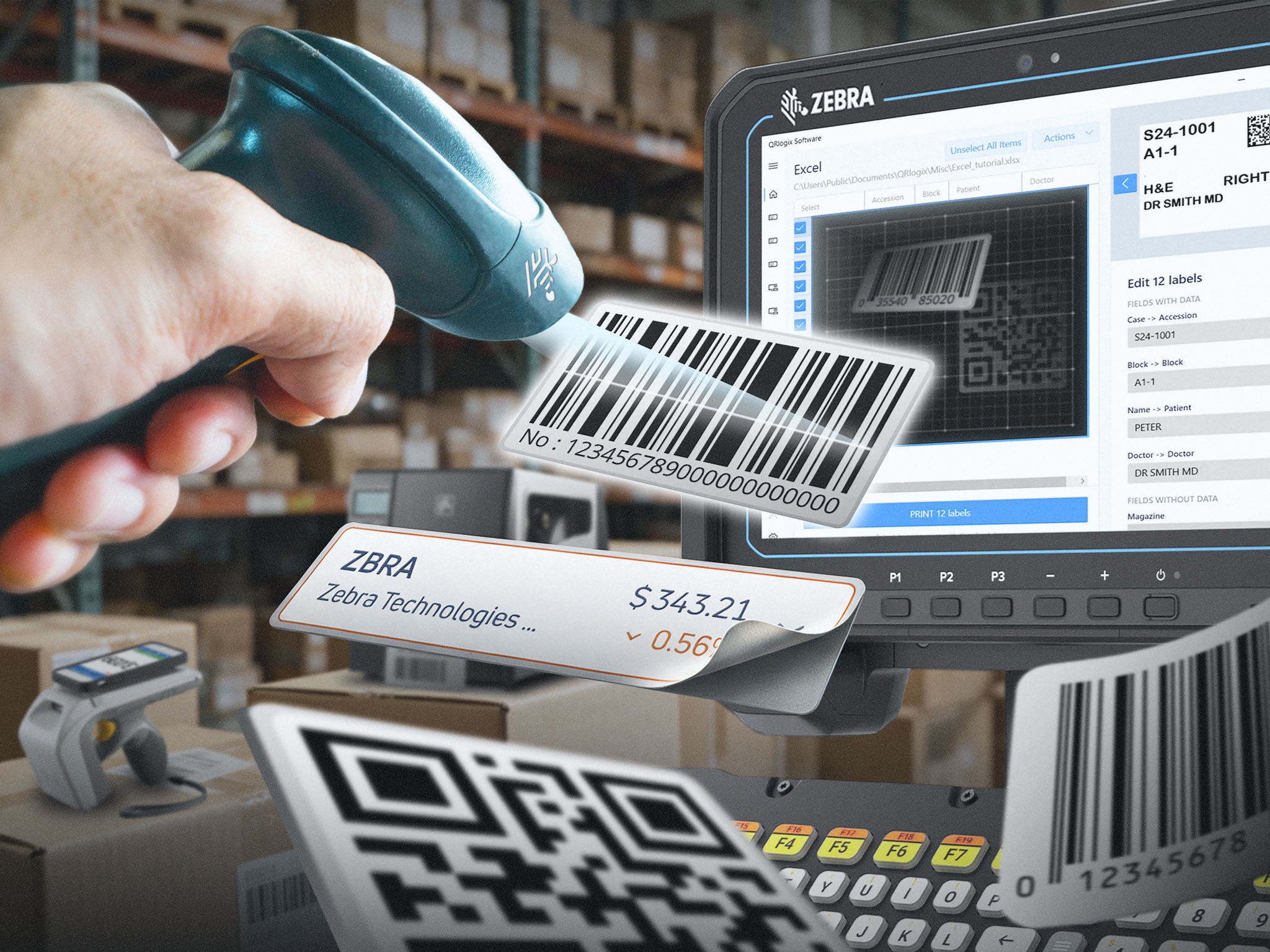


“A zebra can’t change its stripes,” the saying goes. When it comes to Zebra Technologies (NASDAQ: ZBRA), the company has “earned its stripes,” as they say in the military.
Zebra is the dominant player in the global automatic identification and data capture (AIDC) business, offering customers hardware and software. AIDC includes printing, scanning and mobile computing. That encompasses bar codes, QR codes, and biometric scanning.
Zebra provides customized solutions to its customers, which include retail, transportation logistics, manufacturing, and healthcare companies.
“We see Zebra Technologies as a crucial partner for supply chain, logistics, and operational efficiency for customers across industries,” Morningstar analyst William Kerwin wrote in a report. “We like the firm’s wide portfolio and its ability to tailor large solutions to specific customer needs.”
One major advantage for Zebra is the switching costs its customers would face if they decided to try elsewhere, he said. “The firm already has the most comprehensive AIDC portfolio in the world, which allows it to provide customers with deeply specialized and customized offerings to optimize their workflows,” he noted.
“Layering prescriptive software with machine learning and artificial intelligence on top of these solutions allows customers to focus on activities with higher returns on investment and creates a stickier solution by further embedding Zebra’s technology in customer processes.”
Artificial intelligence usage
CEO Bill Burns told Barron’s in May that Zebra’s most advanced customers already are using its artificial-intelligence applications.
“With its end-to-end portfolio of specialized products and integration of software, Zebra’s customers would face monetary cost and significant time investment to switch AIDC vendors, in addition to risking efficiency losses,” Kerwin explained.
As a result, he thinks Zebra can earn returns in excess of invested capital for the next 10 years. “We expect Zebra to benefit from ongoing secular trends toward digitization and automation, notably in omnichannel retail and e-commerce.” The hottest opportunities are in growing its own software and expanding further into healthcare, he said.
Zebra’s depth of hardware and software capabilities puts it far above competitors, analysts and investors agree. “It will be difficult for competitors to catch up,” Kerwin said. “Zebra consistently outspends its competitors on research and development, … and the majority of this budget goes into software, as more than 70% of Zebra’s engineers are in software.”
Recurring revenue
Software generally produces more recurring revenue than hardware. “While Zebra’s hardware forms the arms and legs of a customer’s system — printing and scanning tags — the software, or brain, is what drives the bulk of the efficiency,” he said.
Honeywell sits in second place for AIDC R&D spending, but that’s still $100 million per year behind Zebra, Kerwin calculates.
Zebra generated spectacular earnings in the second quarter, with revenue soaring 20% from a year ago and profit doubling. Sales could have risen even further if not for a semiconductor shortage, Burns said. The company greatly increased its full-year 2026 outlook for revenue, adjusted earnings per share and profit margin.
Investors have taken notice, pushing the stock up 39% year to date.
To be sure, there is concern that surging memory-chip prices due to AI demand will short-circuit Zebra’s growth, John Rogers, Co-CEO, Ariel Investments, told Barron’s. “But Zebra is managing the environment well, with pricing, advanced sourcing, and product redesigns,” he said.
So Zebra may continue earning stripes.


Comments